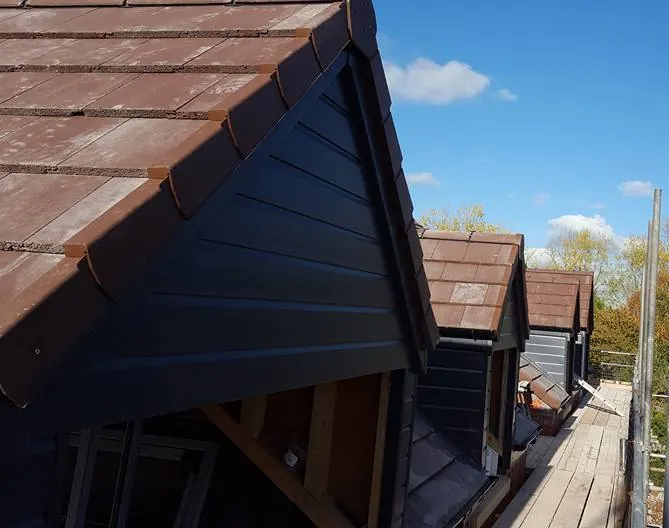
What are fascias and soffits?
The fascia is the long board fixed to the ends of the roof rafters, and it carries the gutter. The soffit is the board underneath, closing the gap between the fascia and the wall. Together they protect the roof timbers from weather and pests, and many soffits are vented to help air move through the roof space.
When is fascia and soffit replacement needed?
Common signs include:
- paint peeling or timber that feels soft when pressed;
- gutters that sag, drip at the joints or overflow onto the walls;
- damp patches on walls or ceilings near the roof edge;
- gaps where birds, wasps or squirrels are getting into the roof.
| uPVC | Painted timber | |
|---|---|---|
| Maintenance | Wipe clean, no painting | Repaint every few years |
| Look | Clean modern finish, several colours | Traditional, suits period homes |
| Rot | Does not rot | Can rot if paint fails |
| Listed or period homes | May not be acceptable | Often preferred |
Should you cap old fascias or replace them?
Capping, also called overboarding, fixes thin uPVC boards over the existing timber. It is cheaper, but if the timber underneath is already rotten, capping hides the problem rather than solving it. Full replacement lets the rafter ends be checked and repaired before new boards go on, which is why it is usually the better option for older or damaged boards.
What about bats and nesting birds?
Bats often roost behind fascias and soffits. All bat species and their roosts are protected by law, so if bats might be present, work should stop until you have taken advice. Active bird nests are also protected, so roof-edge work is best planned outside the main nesting season or after checking there are no nests.
Why is scaffolding usually needed?
Fascia work is done at height, often for a full day or more. The Health and Safety Executive expects work at height to be planned with suitable equipment, which for most roof-edge work means a scaffold or tower rather than ladders alone.
What else do people ask?
How long does fascia and soffit replacement take?
A typical house takes from one to a few days once scaffolding is up, depending on the length of roof edge and the condition of the rafter ends.
Do I need planning permission to replace fascias and soffits?
Not usually for like-for-like replacement on a house. Listed buildings and some conservation areas may need consent, so check with your council first.
Is capping fascias a bad idea?
Capping can work over sound timber, but over rotten boards it hides the rot and lets it spread. Full replacement is usually better for damaged boards.
What should I do if there are bats in my soffits?
Stop any work and get advice, because bats and their roosts are protected by law. Natural England publishes guidance on what to do.
Does Design Wood replace fascias and soffits?
Yes. Design Wood replaces fascias, soffits and guttering across Tamworth and Staffordshire and can advise on uPVC or timber.
Sources and further reading
Regulations change. This guide reflects the sources above as at November 2026; always check the current guidance or ask your council before starting work.
Back to top